
Iraqi cuisine is filling and flavorful, often served in family-style portions, giving visitors plenty of opportunities to try various foods. This was my experience when I traveled with Doug Barnard Travel, who ensured we tasted the best of the local cuisine.
Iraqi dishes often feature spices such as cumin, cardamom, sumac, and za’atar—a herb blend similar to thyme or oregano. Alongside these, travelers can enjoy a variety of rice dishes, bread, and sides like Baba Ghanoush (a smoky and creamy eggplant dip) and hummus.
The key to enjoying Iraqi food is to pace yourself. Expect side dishes and salads as the first course when dining with a group.

It’s easy to fill up on bread and hummus, so be mindful to save room for the main courses and, of course, a bit of dessert, which could include fresh fruit, sweets, or both.
Iraqi food predominantly centers around meat, chicken, and fish, with some vegetable dishes such as spinach. However, vegetarians and vegans might find it a bit challenging, so expect to rely on falafel, bread, sides, and salads.
For some must-try dishes, here is a list of the twelve foods you shouldn’t miss when visiting Iraq:
Masgouf
Iraq’s national dish, Masgouf, is typically carp roasted on an open fire. Vendors in Baghdad often grill the butterflied fish, or you might experience a local family preparing it. During my trip, we enjoyed Masgouf in Chibayish, a village where we took a boat tour of the Mesopotamian Marshes.
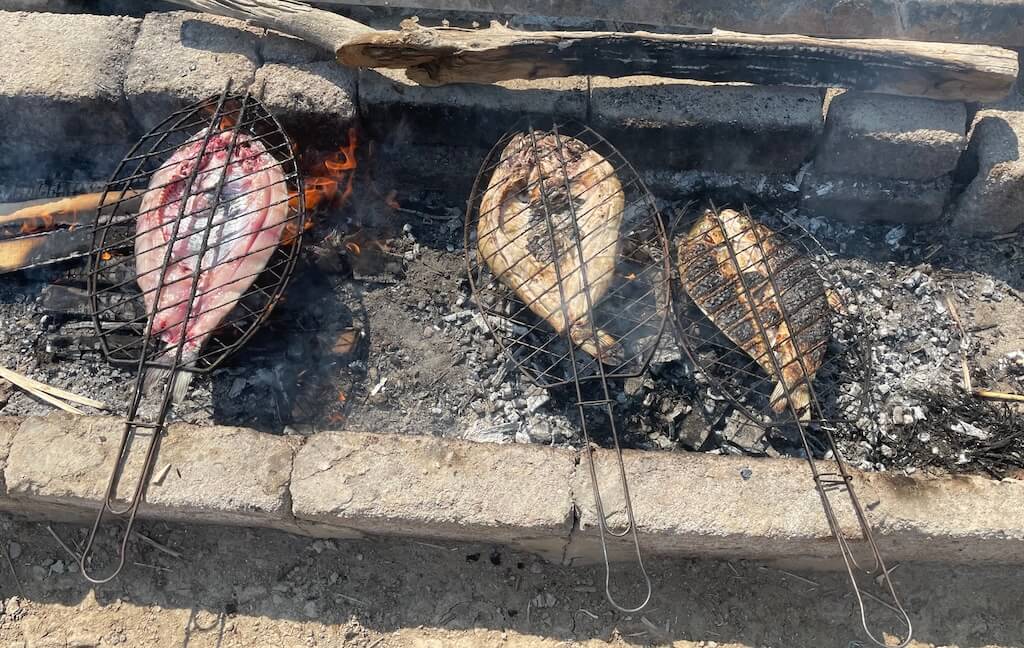
Our local host family barbecued the fish, adding lemon slices and onion. We enjoyed it with flatbread similar to naan, long-grain rice, tomato, cucumber, and pickled vegetables. The combination of fresh grilled fish with lemon and onion was simply irresistible.
Dolma
Dolma is a dish with different variations, but in Iraq, it usually consists of grape leaves stuffed with broiled vegetables and rice. The flavors of tomato, parsley, and onions enhance the smoky and slightly sweet taste of this dish.

A dash of lemon adds extra zest, making this one of my favorites among the twelve must-try foods in Iraq.
Kubba
Kubba is a popular dish in Iraq, often served at hotels for breakfast and found on restaurant menus for lunch and dinner.

It features a pie crust-like shell filled with minced meat, seasoned with cumin, onion, and black pepper. The crispy, fried dough-like texture makes it easy to enjoy three or four pieces before feeling full.
Kubba with Laban
This variation of Kubba is served with Laban, a fermented yogurt that can be slightly salty. The Kubba is served in a dumpling soup-like dish, with the Laban adding a creamy, tangy flavor. I preferred this version of Kubba because I enjoy anything with a good sauce.

Chicken Tagine
Chicken Tagine is a delightful dish where shredded chicken and cheese are served in a clay pot, covered with crispy flatbread.

The smoky flavor, possibly enhanced by the clay pot, adds a delicious depth to the chicken and cheese. The dish is typically served with white and biryani rice.
Kahi and Geymar
Kahi bread, soaked in sweet syrup, is an Iraqi breakfast staple and one of my favorite Iraqi dishes. It pairs perfectly with fresh Geymar, a thick buffalo cream.

The bread, cooked in a wood-fired oven, is not overly sweet and is typically enjoyed with black tea. Expect to see lines outside shops serving this treat, but the wait is usually short as they serve customers quickly.
Kofta Kebab
Grilled Kebabs are a favorite in Iraqi cuisine, with hints of cumin and black pepper enhancing the BBQ flavor.

Kebabs are usually served with flatbread, grilled tomatoes, and onions. Most restaurants grill them outside, and I particularly enjoy adding hummus to my kebabs.
Baklava
Baklava comes in various forms, typically featuring phyllo dough, honey, and nuts. However, the version I had was a flaky pastry with cream inside and crumbled pistachio on top, making it lighter and less sweet than the traditional version.

This creamy version was a nice treat after a full meal, and several dessert shops in Baghdad offer both traditional and cream-filled Baklava.
Daheen
While exploring the markets in Najaf, you’ll notice stalls selling Daheen, a sweet treat resembling fudge bars with a graham cracker-like crust.

The original flavor, which won our group’s taste test, consists of date syrup, flour, oil, and sugar topped with coconut. Other varieties include cream or walnuts. Daheen is a well-known sweet in Najaf and a must-try food in Iraq.
Samoon
Samoon is a traditional flatbread found at bakeries and small shops throughout Iraq. Baked in a traditional fire-stone oven, some versions are topped with sesame seeds.

This bread is best enjoyed hot and fresh, either on its own or paired with cream, hummus, or other dishes.
Shawarma
Shawarma is a popular street food in Iraq, with stalls offering various meats.

I enjoyed a chicken shawarma with a spicy mango sauce, recommended for falafels. The sauce added an extra kick, which I loved.
Quzi
Quzi is a rice dish typically served with lamb that falls off the bone. The tender meat, flavored with cardamom, is often paired with biryani or plain rice.

Some versions also include chicken or come with almonds and raisins. This is another must-try Iraqi food that you won’t want to miss.
Get ready to be dazzled by the flavors and uniqueness of Iraqi food. While it shares similarities with the cuisines of neighboring countries, Iraq has its own distinct take on dishes like dolma, masgouf, bread, and tagine.
It’s common to eat with your right hand, but cutlery is available at restaurants. For an authentic experience, try eating with your right hand during meals.
The spices—za’atar, cardamom, and cumin—enhance the smoky, BBQ flavors of Iraqi dishes. Remember to pace yourself so you can sample a little bit of everything. When visiting Iraq, make sure to try these twelve authentic examples of Iraqi cuisine!
Wondering about other Middle Eastern cuisines? Check out our guide to Jordanian food!