Mastering Japanese knife maintenance tips preserves the sharpness, balance, and beauty of these finely crafted tools. Japanese knives are renowned for their precision, thin edges, and elegant design, but neglecting care can reduce performance, damage the blade, and even affect cooking results.
Understanding how to clean, sharpen, store, and use these knives correctly transforms them from delicate instruments into durable, dependable tools. Consistent attention keeps each knife performing at its best for years to come.
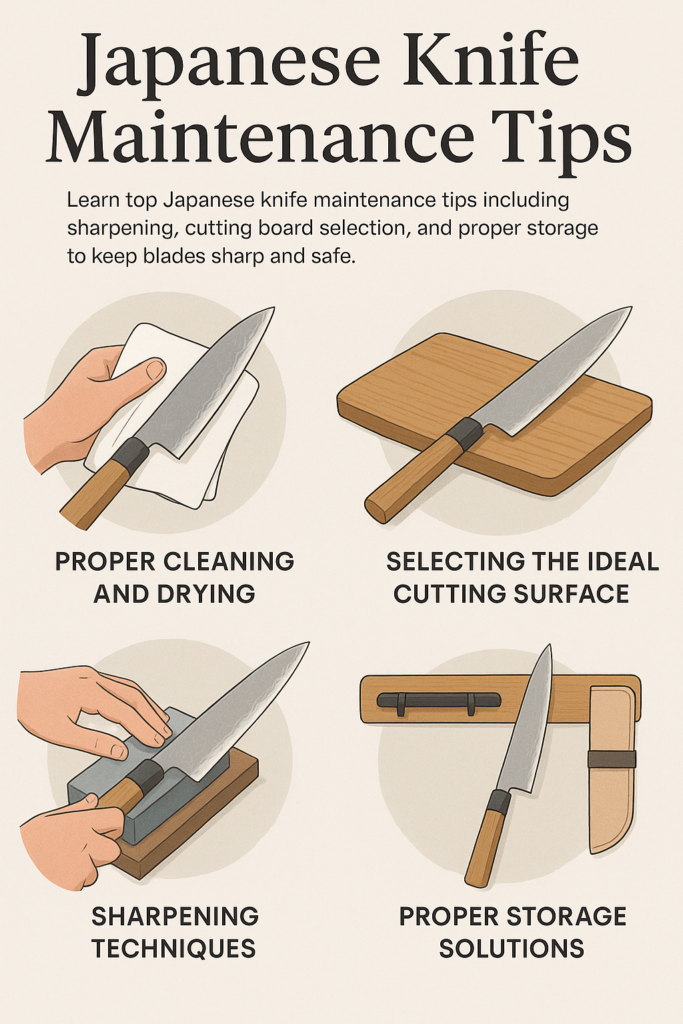
Proper Cleaning and Drying Practices
Daily care begins with thorough cleaning immediately after use. High-carbon and layered steel blades are prone to corrosion if left with food residue or moisture. Warm water and mild dish soap remove oils, acids, and tiny food particles. Avoid putting knives in dishwashers because harsh detergents and heat can degrade the edge and compromise the handle.
After washing, carefully dry each blade with a soft towel to prevent rust. Even brief exposure to water can create spots or oxidation on high-carbon steel. Repeating this routine after every use establishes a habit that preserves sharpness, extends blade life, and reduces the risk of staining or corrosion.
Selecting the Ideal Cutting Surface
The surface on which you cut affects knife longevity. A Japanese cypress cutting board is often preferred for its soft yet durable quality. The wood absorbs impact, reducing edge wear and helping maintain a razor-sharp blade. Hard materials like glass, stone, or metal can quickly dull or even chip the edge.
Using a wooden board consistently also prevents tearing or crushing delicate ingredients like vegetables and fish, producing smoother slices and cleaner presentation. Rotating different boards for various foods distributes wear evenly and preserves the knife’s cutting performance.
Sharpening Techniques
Maintaining a keen edge is necessary for both performance and safety. Using a sharpening stone allows gradual restoration of the blade without removing too much material. Start with a coarse grit to deal with dull edges, then progress to medium and fine grits for a polished finish.
Angle consistency is important, especially for single bevel knives, but even double bevel knives benefit from careful control during sharpening. Applying minimal pressure while working along the blade length produces a clean, uniform edge. Regular sharpening prevents uneven cuts, reduces effort when slicing, and maintains the tactile satisfaction of a well-tuned knife.
Honing Between Uses
Honing complements sharpening by realigning the microscopic bends and irregularities that develop with regular cutting. Using a honing rod maintains a smooth, efficient edge between sharpening sessions.
Single and double bevel knives respond differently during honing and comprehending the blade geometry helps each stroke be effective. Regular honing reduces resistance when cutting, improving precision and speed. Chefs often incorporate short honing sessions into daily prep to maintain consistent performance, so each cut can remain clean without repeated sharpening.
Proper Storage Solutions
Safe storage protects the blade, the handle, and the user. Avoid placing knives loosely in drawers where edges can rub against other utensils. A fabric sheath or roll-up carrying bag protects individual blades while allowing convenient transport.
Magnetic knife strips hold knives securely and keep edges accessible without contact with other surfaces. Knife blocks work well if the slots fit snugly, which helps avoid wobble and prevents accidental edge damage. Storing knives properly preserves sharpness, prevents rust, and minimizes the risk of accidents in busy kitchens.
Handle Care and Inspection
The handle is integral to control and stability while cutting. Wooden handles may require occasional oiling to prevent drying, cracking, or warping. Composite or synthetic handles benefit from visual inspection to detect loosening, chips, or cracks.
A secure handle reduces fatigue during extended prep sessions and prevents slips that can lead to accidents. Proper handle maintenance also helps guarantee that the blade feels balanced and responsive, contributing to both precision and comfort during cooking.
Rust Prevention
High-carbon steel blades are particularly susceptible to rust if neglected. Keeping knives dry, cutting on appropriate boards, and applying a thin layer of oil after cleaning help prevent corrosion. Stainless steel knives are less reactive but still benefit from careful drying and storage.
Rust not only diminishes aesthetics but also impacts cutting performance. Maintaining a protective layer, monitoring moisture, and cleaning promptly after acidic foods preserves both function and appearance.
Professional Sharpening and Edge Care
Occasional professional sharpening restores blades to peak condition. Experienced sharpeners know Japanese bevel angles and can refine edges without removing excessive material. Even well-maintained knives benefit from professional attention after extended use, particularly those with high-carbon or delicate edges.
Professionals can also inspect and correct minor handling issues. Combining professional sharpening with home care preserves the knife’s cutting quality, so it performs consistently for years.
Frequency and Routine Maintenance
The frequency of maintenance depends on use. Daily kitchen work, including chopping, slicing, and filleting, may require weekly honing and periodic sharpening. Knives used less often still benefit from inspection, light cleaning, and occasional honing.
Noticing signs like increased cutting resistance or uneven slices helps determine when maintenance is required. Keeping a regular care routine ensures knives stay sharp, safe, and efficient, minimizing wear and enhancing overall performance in the kitchen.
Integrating Maintenance Into Daily Practice
Incorporating Japanese knife maintenance into everyday routines simplifies care without disrupting cooking flow. Washing immediately after use, drying thoroughly, and storing carefully protect the blade. Regular honing and occasional sharpening preserve cutting precision.
Using a Japanese cypress cutting board and avoiding hard surfaces reduces edge wear. Practicing these habits consistently keeps knives responsive, safe, and reliable. Over time, maintaining knives becomes second nature to make preparation smoother and boost both efficiency and culinary presentation.
Preserving Precision and Craftsmanship
Applying thoughtful Japanese knife maintenance tips transforms each knife into a long-lasting, precise, and reliable tool. Using a sharpening stone, cutting on a Japanese cypress cutting board, honing regularly, and storing in a fabric sheath or roll-up carrying bag preserves both edge and handle.
Proper cleaning, drying, and handling care prevent corrosion and reduce wear, maintaining the knife’s visual and functional qualities. Consistent maintenance not only prolongs the life of the blade but also celebrates the craftsmanship behind each tool.
Caring for knives in this way will mean that every slice, chop, and garnish remains sharp, precise, and aesthetically pleasing.