
Exploring Lisbon is a joy and a privilege, though its history includes some darker chapters, such as the Inquisition, when Jews and Muslims were exiled or burned alive in public squares, and the devastating 1755 earthquake. Despite this, the city today offers visitors a wealth of sights and experiences to enjoy.
Partaking in Lisbon’s history, architecture, and art can workup an enormous thirst and appetite. So, since you are immersing yourself in Lisbon’s fascinating culture and vibrant atmosphere, why not go all the way and eat like the locals?
An excellent way to dive into the Lisbon food scene and experience authentic Portuguese food is by treating yourself to a food tour. These are run by locals who know where to find the best edibles and potables and the hidden gems that serve them. This also allows you to sample a variety of offerings, which will help in planning future meals and snacks.
My husband and I participated in The Ultimate Lisbon Food & Wine Walking Tour. Although we were generously hosted by The Tour Guy, we were truly enchanted by Jose, our charming and knowledgable guide, as well as the quality and variety of the items we sampled.
Portugal has always been a seafaring nation, and her sailors brought many ideas and ingredients from the areas Portugal colonized back to their native shores. The country incorporated ingredients from those colonies into its own cuisine, making for some surprising and tasty results.
My husband and I marveled at the number of Indian restaurants we saw in Southern Portugal, and we dined at an outstanding Asian noodle shop in Lisbon. But what about authentic Portuguese fare? Here are some of the delights we enjoyed while in Lisbon.
Where to Find the Best Authentic Portuguese Food in Lisbon
Solar da Madalena
Rua Madalena 228, 1100-325 Lisboa, Portugal // +351 961-654-862
This casual restaurant is an excellent choice for trying Bifana, a savory stewed pork sandwich Lisbon locals enjoy any time of the day or night. Accompanied by an ice-cold beer, it makes a tasty snack or light meal.

To make Bifana, pork is simmered all day in a sauce of lard, wine, and garlic. At the end of the day some of the sauce is reserved, and the next morning, new pork and sauce ingredients are added to the reserved concoction from the night before. Then the all-day simmering begins anew.
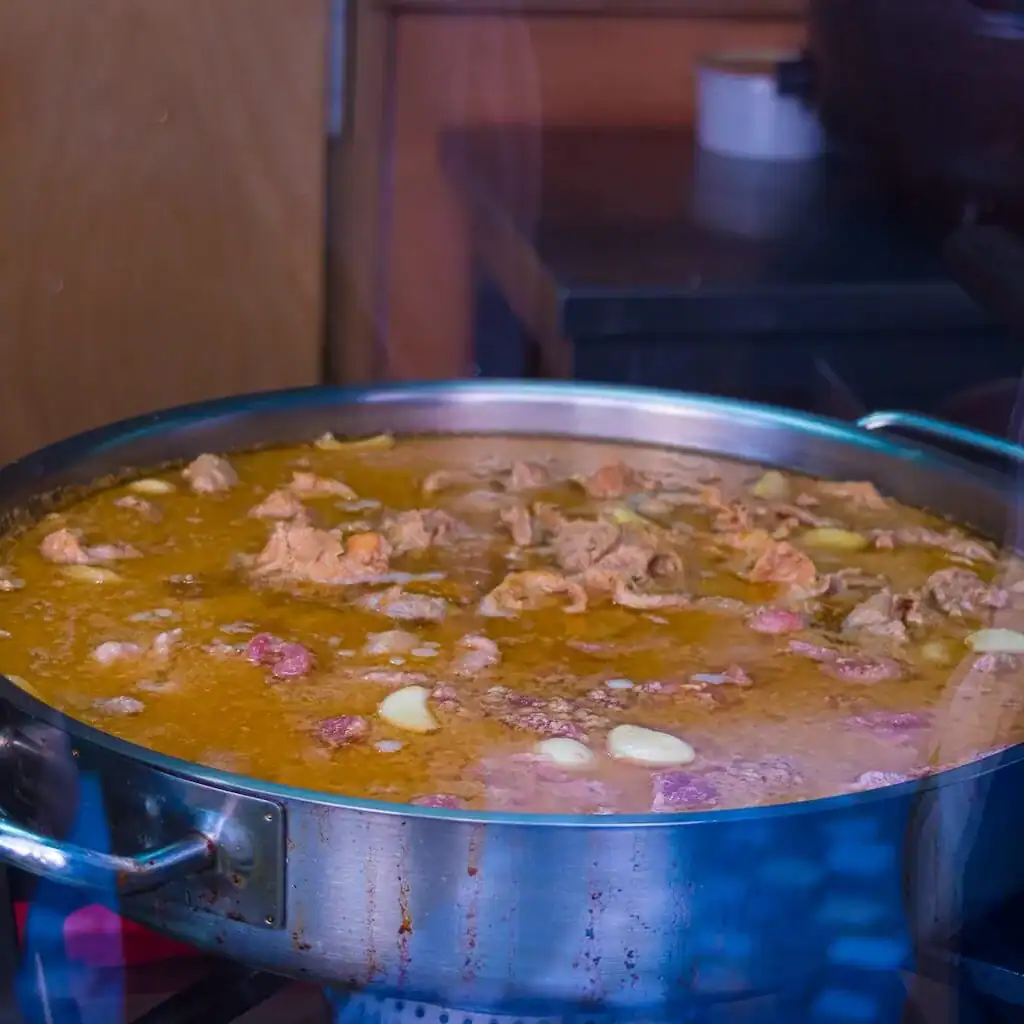
We found the meat incredibly tender and full of flavor. Tucked into papo secos, a crusty roll with a fluffy interior, the meat juices soaked into the bread. This added extra flavor to the roll.
Condiments included a mild vinegary mustard and a not-for-the-fainthearted Piri-Piri sauce. Brought to Portugal from the African colonies, this spicy sauce is also popular as a baste for chicken.
Solar da Madalena is popular with locals for snacks and light meals. Along with Bifana, the restaurant serves cod cakes, savory pastries, and soups.
Caneca de Prata
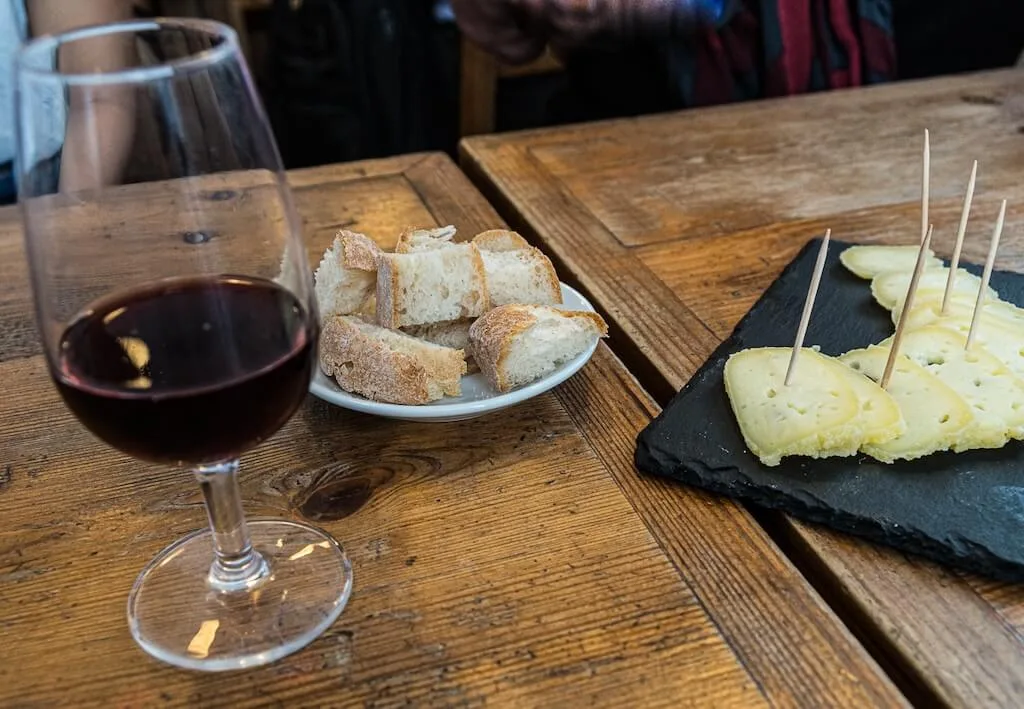
One of the things for which Portugal is famous is its port. And one of the best pairings with port is a fine cheese. We were fortunate to find both at Caneca de Prata, a charming restaurant that has been in operation since 1974 and is located in an 18th-century building.
I’m not generally a big fan of port, but the tawny port that was recommended to us was a pleasant surprise. It had a rich flavor and was not too sweet.
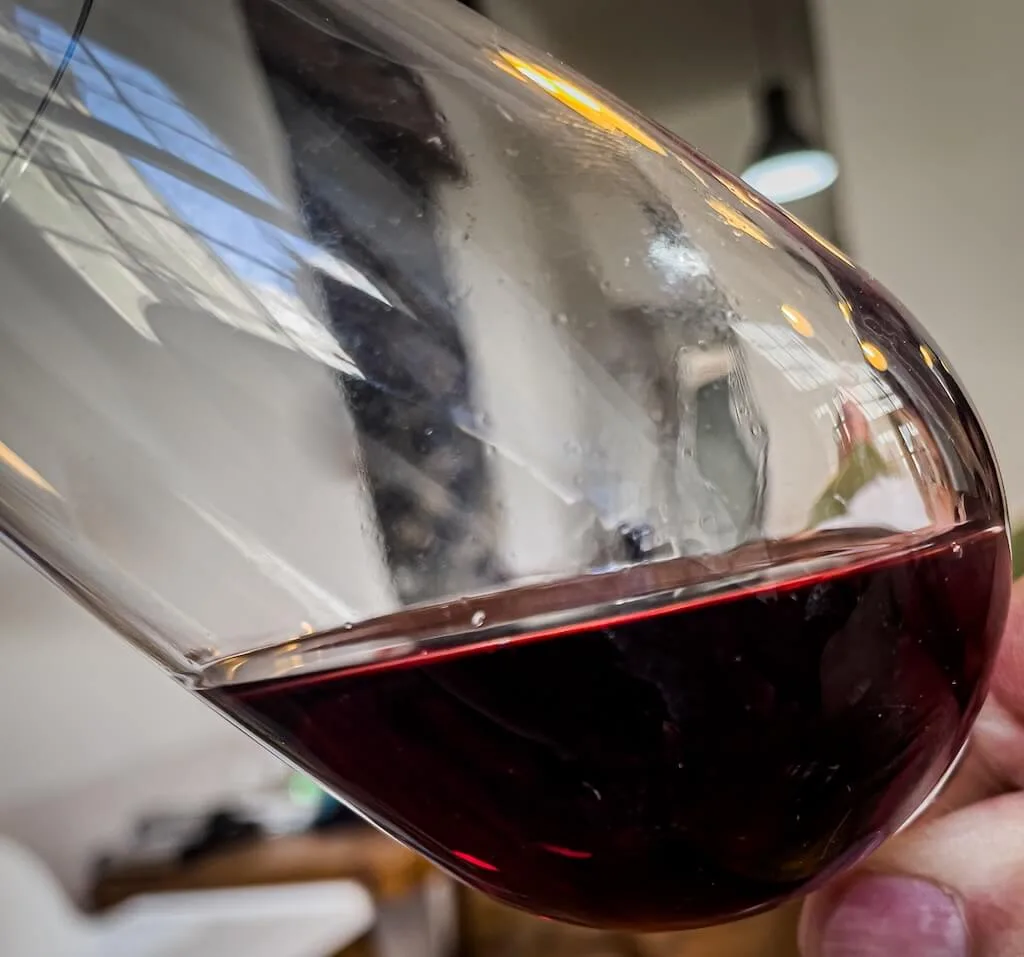
The accompanying semi-soft cheese had an edible rind with a hint of tartness. The flavor and texture complemented the port quite well. The cheese came from Niza a small village between Lisbon and Algarve.
Caneca de Prata also serves sardines, cod, and fried liver, and offers daily specials.
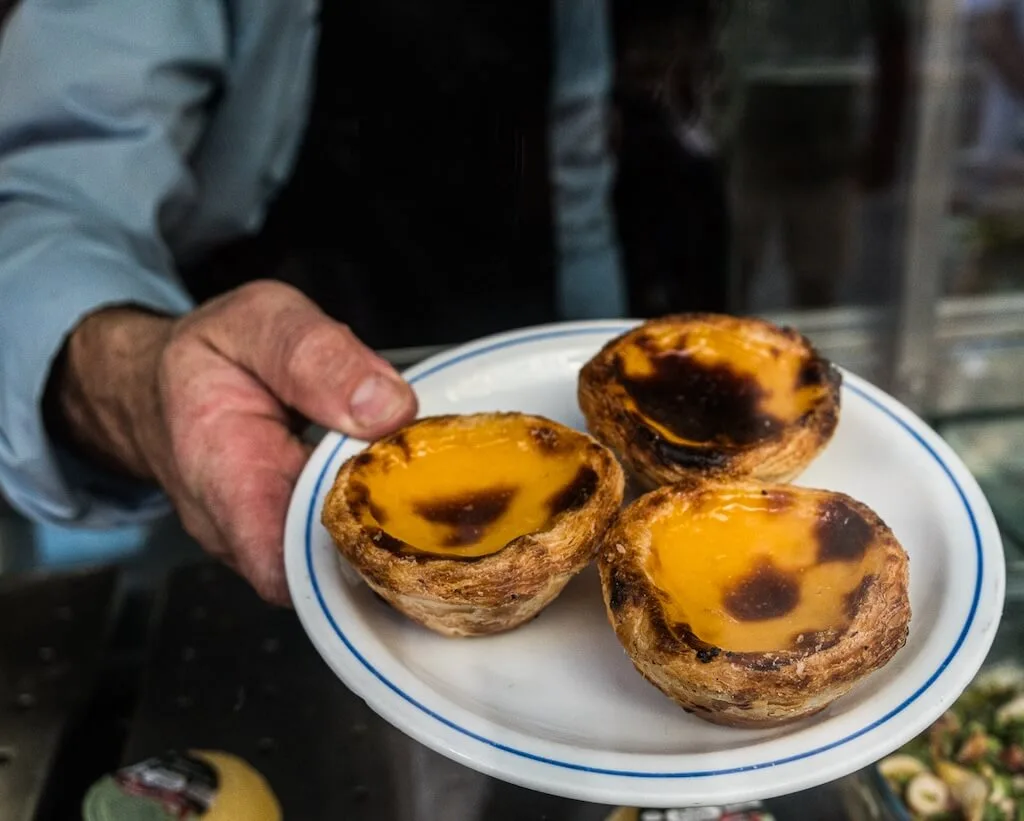
Tendinha do Rossio
Praça D Pedro IV n6, Rossio // +351 213-468-156
Although the Portuguese are the largest per capita consumers of cod in the world, you won’t find a single one swimming in Portuguese waters. In order to feed the country’s insatiable cod habit, Portugal imports its entire supply from Norway, Iceland, and Canada. That’s why you’ll see some form of cod on just about every menu you pick up.
We discovered some excellent cod cakes at Tendinha do Rossio, the oldest tavern in Lisbon, dating back to 1840.
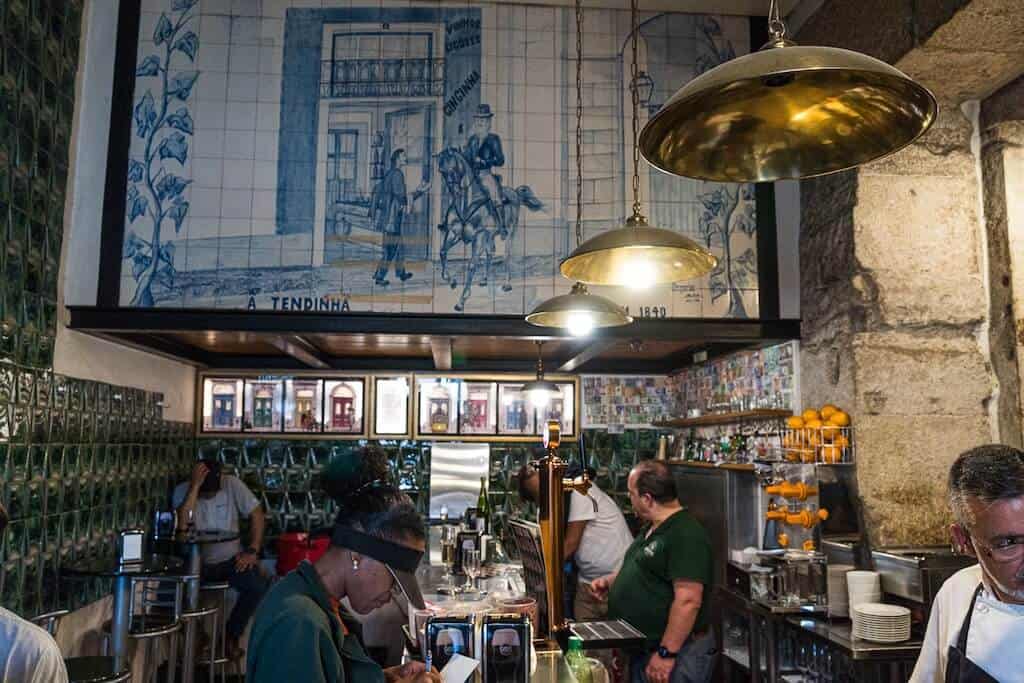
And the green wine from the Porto area we drank with our cod made an ideal pairing.To be clear, green wine isn’t green in color. The green refers to the fact that it is a young wine. Ours was fruity with a touch of tartness and bubbles. This wine is especially refreshing in summer
Our cod cakes were oval in shape with a golden crust. They were comprised of a combination of fish, mashed potato, and parsley that was deep-fried. The crispy exterior is created by the potatoes in the mixture, and not from any additional coating.

Add some soupy tomato rice, and you have a fabulous meal.
Cervejaria Inhaca
Rua Portas Santo Antão 8 // +351 213-477-039
Speaking of soupy rice, this style of preparation can be found all over Portugal as a base for an assortment of dishes. One of my favorite variations is octopus rice, a soupy stew containing bits of octopus, cilantro, and rice in a flavorful broth.
On a pleasant Lisbon evening, my husband and I sat at an outdoor table at Cervejaria Inhaca and dug into a seafood stew that was right up there with my beloved octopus rice. Teaming with prawns, clams, lobster, and crab, this dish checked all my boxes for flavor and texture.

The seafood was not only plentiful, it was cooked to perfection. The sauce was flavored with cilantro, which was readily absorbed by the medium-grain rice which had a slightly chewy texture.

We enjoyed a soft white wine that paired nicely with the dish. It didn’t compete with the seafood but had enough body and flavor to hold its own.
Casa do Alentejo
Rua Portas de Santo Antão 58 // +351 213-405-140
Casa do Alentejo was originally a private family residence complete with a coat of arms at the top. It once housed a casino, until the dictatorship began in the 1920s, and in 1923 the building became known as the House of Alentejo, the region between Algarve and Lisbon.
Today this historic building is a popular restaurant featuring a small museum and a courtyard with an olive tree in the center. The entire interior echos, but not to the point where it becomes unpleasant.

Casa do Alentejo was the last stop on our tour and this gave us the opportunity to sample small portions of several dishes. By this time, our group of strangers had become more like a bunch of pals out for a good time, which added to our enjoyment of the food. It happens every time, which is why my husband and I love food tours.
The selection of dishes included a chickpea and cod salad with cilantro and onion, a firm salty goat cheese on crusty bread, chorizo, and sarenheira, lightly scrambled egg with smoky finely ground sausage.

The salad was a superb combination of tastes that blended beautifully, yet maintained the integrity of each ingredient. The slight saltiness seemed to enhance the flavors without overpowering the dish. It was absolutely scrumptious, as were the goat cheese and sarenheira.
The chorizo was surprisingly disappointing. The smoky, mildly spicy flavor was tasty, but the sausage had an unpleasant amount of gristle.
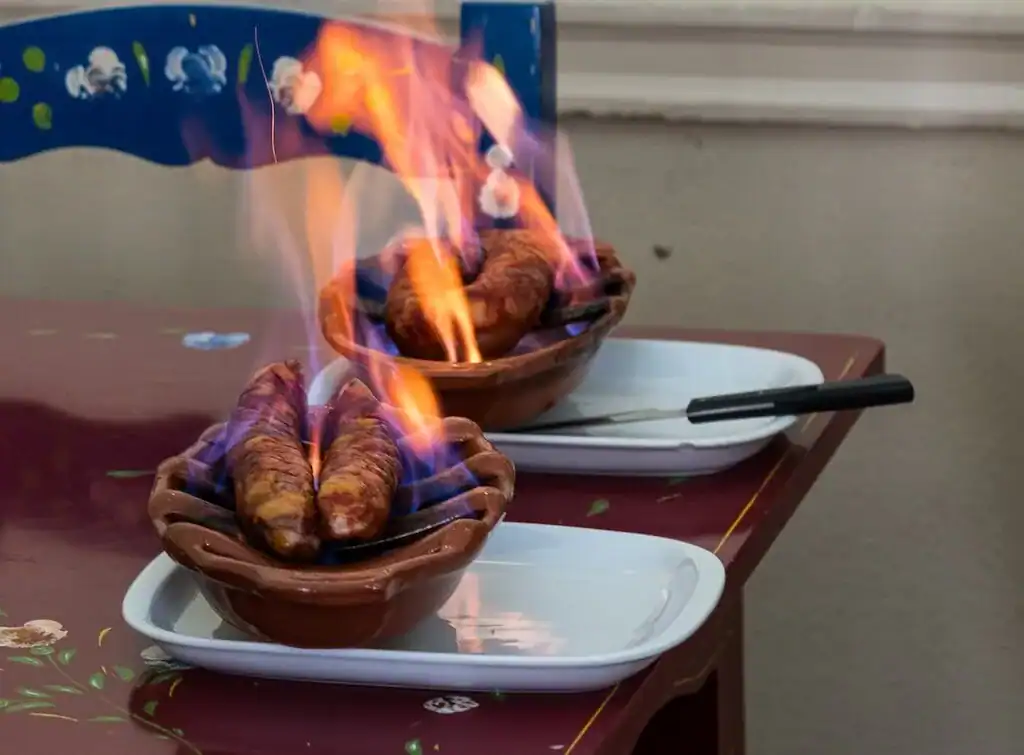
Seasonings and methods of preparing chorizo vary from those in Spain and from region to region. We learned that in Portugal, butchers use a coarse grind for their chorizo, and include every part of the pig except for the squeal.
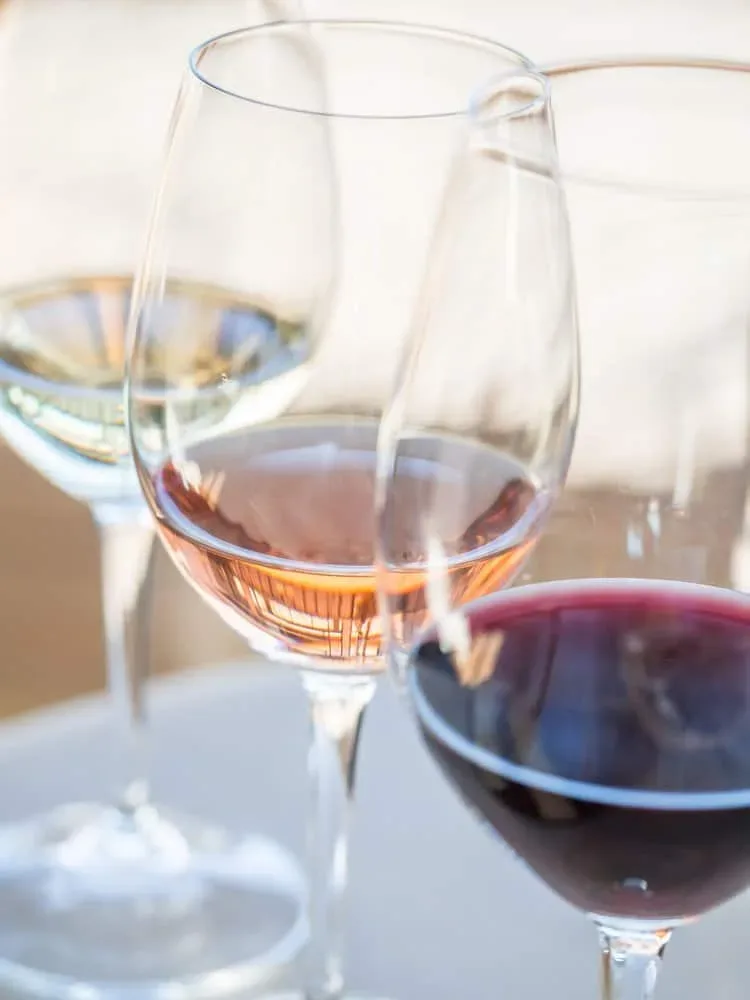
A red wine from Alentejo accompanied the food. It was too heavy on tannin for my taste, but others in our group thought it was excellent. As with all wine-producing countries, Portugal has a wide variety of wines to suit every palate.
A Ginjinha Espinheira
Ginjinha is a liqueur made from small sour cherries, and is a delightful finish to a satisfying meal or as an afternoon treat. If you find yourself in Largo de São Domingo – St. Dominic Square – take note of a small shop with a long line snaking out the door. That’s where you’ll find ginjinha. A Ginjinha Espinheira opened its doors in 1910 and has been selling nothing but this delicious little cherry bomb ever since. So get in line. It’s worth the wait
Northern Portuguese monks originally invented ginjinha as a cough syrup. Today, you can find it anywhere as a cure for more than coughs.
We first discovered ginjinha in Alfama, the only Lisbon neighborhood spared from total destruction by the 1755 earthquake. Women were selling the drink to passersby from their doorways and front windows
Ginjinha is made by combining small sour cherries with sugar and alcohol. The mixture ferments for a year, and then the cherries are separated from the liqueur. Sugar and cinnamon are added, and the liqueur is bottled. Cherries are added back to some of the bottles before capping.
The flavor of ginjinha is sweet and not too heavy on the cherry taste. It’s somewhat similar to cough syrup, only much, much better. If you have cherries at the bottom of your cup, they’ll taste slightly bitter with a hint of alcohol and cinnamon. Be aware the cherries have pits.
While sipping your ginjinha, take a wander through the square. It’s lined with shops and cafes with the magnificent medieval Igreja de São Domingos – Church of St. Dominic – and the Palace of São Domingos as its focal points.
The Lisbon Wrap-up
Whether you’re listening to the haunting melodies emanating from the throat and heart of a black-clad traditional Fado singer, or people-watching at a sidewalk café, feasting on authentic foods completes the Lisbon experience. So forget the international chains and tourist traps and seek out the foods that make Portuguese cuisine stand out.
It’s not as daunting a task as it might seem. Along with taking a food tour, you can usually find those local gems down alleyways, in neighborhoods, and at least three blocks from tourist attractions. This might sound like a gamble, but definitely worth the effort.
Also, be sure to check out our guide to the best rooftop bars in Lisbon for great places to have a drink with a view!