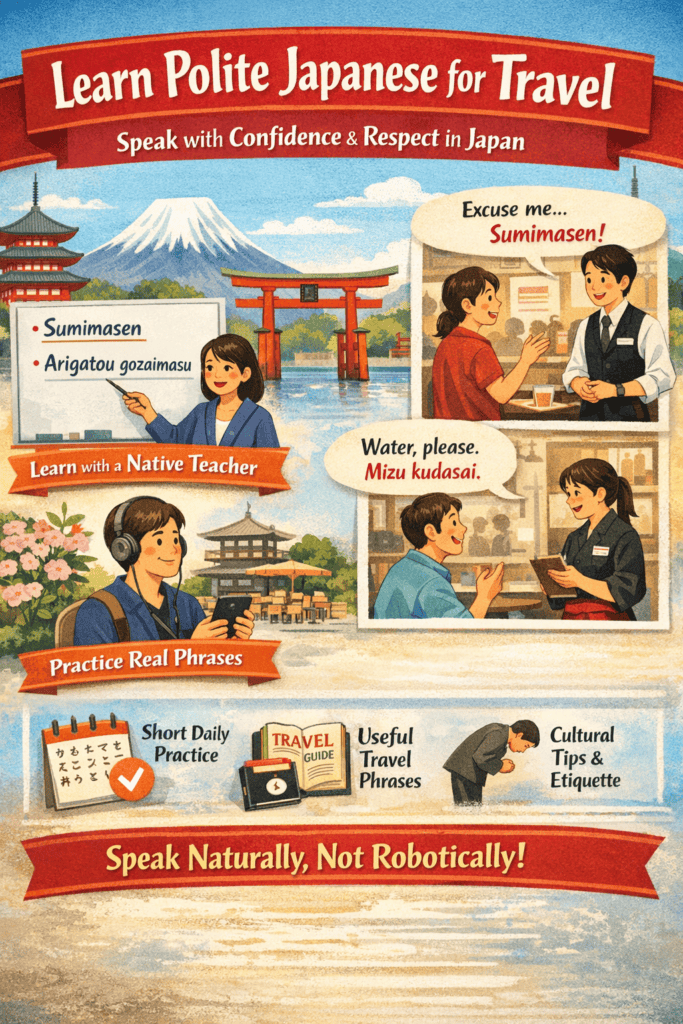
Traveling in Japan feels smoother when you can speak with respect and confidence. However, memorizing long phrase lists often leads to confusion or robotic speech. You can learn polite Japanese by focusing on real conversations and practical phrases instead of endless word lists. This approach helps you communicate naturally and understand how politeness works in everyday interactions.
To learn faster, it helps to hear polite Japanese used in real situations and understand why certain forms are chosen. Some travelers rely on guidebooks or short audio courses, while others learn with a Japanese teacher for travel prep to clarify tone, etiquette, and common situations they are likely to face, such as ordering food or checking into a hotel. This kind of guidance helps learners focus on what is practical rather than memorizing phrases they may never use.
Short daily practice and exposure help you remember better than memorizing textbooks. By hearing polite phrases in context, you start to recognize the rhythm and structure naturally. Over time, you respond with confidence instead of rehearsed words.
Key Takeaways
- Focus on practical phrases for real travel situations.
- Learn through real conversations with a native teacher.
- Use short, daily practice sessions to build polite speech naturally.
Mastering Essential Polite Japanese Quickly
You can build practical speaking skills in polite Japanese by focusing on courtesy phrases, greeting patterns, and short expressions for sudden or sensitive situations. These areas give you confidence to navigate daily life in Japan without memorizing long lists of words.
Most-Used Courtesy Phrases and Their Functions
Certain polite words appear in nearly every exchange in Japan. Sumimasen means “excuse me” or “sorry,” and you can use it to get attention or apologize. Kudasai means “please” and helps you make requests respectfully, such as mizu kudasai for “water, please.”
Common expressions like arigatou gozaimasu (thank you very much) or onegaishimasu (please, in a formal sense) also show respect. Each phrase fits a clear purpose, which helps you remember them through use rather than memorization.
To sound natural, notice tone and timing. A soft voice and short bow often accompany polite words. In shops or restaurants, repeat simple Japanese travel phrases like sumimasen or arigatou naturally throughout the day. These habits strengthen your comfort with Japanese basics.
Strategic Greetings for Different Situations
Japanese greetings signal respect and awareness of time and setting. Use ohayou gozaimasu in the morning, konnichiwa for midday, and konbanwa in the evening. Simple adjustments in timing help you fit local customs easily.
Sayonara means “goodbye,” though locals often use shorter partings like jaa ne or mata ne among friends. For polite farewells in public spaces, say shitsurei shimasu or dewa mata. Each phrase functions best in a defined context, so you avoid sounding overly formal or casual.
While traveling in Japan, greetings often reflect omotenashi, or thoughtful hospitality. Returning a greeting with sincerity shows respect for the culture. A small smile and nod can add warmth where language fluency may not.
Minimal Phrases for Emergencies and Apologies
During travel, a few brief expressions can help you handle sudden problems. Say tasukete! for “help!” or byouin wa doko desu ka? for “where is the hospital?” Keep these short phrases ready for urgent moments.
For mistakes or inconvenience, use sumimasen again or gomen nasai for a stronger apology. These polite words signal responsibility without heavy explanation.
List a few emergency expressions before your trip:
- Keisatsu wa doko desu ka? (Where is the police?)
- Mayoi mashita (I am lost)
- Denwa o kashite kudasai (Please lend me a phone)
Such minimal phrases help you respond clearly and respectfully, even under pressure, while maintaining the courtesy valued in Japanese language and culture.
Effective Learning Methods for Travelers
You can gain polite and useful Japanese without long study hours by focusing on practical expression, real use, and simple habits. Paying attention to natural speech and cultural context helps you sound more respectful and confident during your travels.
Memorization-Free Techniques for Rapid Results
Skip long vocabulary lists and learn through context. Use short, real conversations such as asking for directions in Japanese or ordering food. Repeated exposure to short, useful phrases builds memory faster than rote study. This helps you learn how polite words fit into real talk.
Divide your focus into small goals. For example:
- Practice greetings and polite endings like -masu and -desu.
- Use Japanese numbers when shopping or reading prices.
- Listen to short clips with native Japanese pronunciation.
Try shadow practice, which means repeating short audio clips aloud. It improves accent and tone without forcing you to memorize. Over time, your ear starts to recognize polite and casual forms naturally.
Leveraging Japanese Writing Systems for Politeness
Understanding the Japanese writing system makes polite speech easier to notice. You should learn basic hiragana first because it forms polite endings and common expressions. Move to katakana next for foreign words you might see on signs or menus. Later, focus on everyday kanji like 日 (day), 食 (eat), or 行 (go).
Each writing style gives you clues about tone and formality. For example, kanji used in polite phrases often appear in formal settings such as shops and train stations. Reading these signs helps you identify polite words through context instead of memorizing them.
Keep a small notebook or phone note for useful symbols and phrases you encounter. This method helps connect visual memory with real-life use.
Using Technology and Cultural Tools
Language apps and digital tools provide a fast way to refine what you learn. You can use speech recognition tools to repeat and correct pronunciation immediately. Translation tools such as Google Translate can check grammar and tone, but you should always test phrases aloud to hear how natural they sound.
Audio-based learning tools with slow playback help improve listening comprehension. Pair them with short role-play exercises, like asking for help at a station or ordering tea.
Cultural habits also guide polite communication. Bowing slightly, using honorifics like -san, and showing patience reflect respect beyond words. Combining small cultural manners with basic Japanese phrases creates better interactions and shows genuine effort.
You can speak polite Japanese without memorizing endless lists. Focus on phrases that fit everyday travel needs, such as greetings and requests. Use them in real situations so they stay in your memory naturally.
Practice small sets of words and repeat them during your trip. For example, saying “arigatou” (thank you) or “sumimasen” (excuse me) helps you sound respectful. Locals appreciate effort more than perfection, and that builds confidence fast.
Listen to how people speak and notice tone or gestures. These subtle cues teach you what sounds natural. Over time, you create habits that make polite speech part of your routine.
In short, learn through use, not memorization. Focus on meaningful phrases, practice through real interaction, and stay patient. With steady effort, you gain both comfort and respect as you explore Japan.