

“I’m not really into food,” Ajay told me. “In fact, when I travel, I think food is a waste of time.” I tried not to be personally offended.
At that moment, I challenged myself to make my new friend see the error of his ways. Ajay is an award-winning photographer and was recently named one of the best photographers in all of India. I wondered how someone from a country so famous for food could not be a foodie. I decided to make a believer out of him. Someone with such fine taste in all things related to photography had to have foodie potential.
Fortunately for me, I would have help in winning Ajay over. Ajay was a part of my FAM trip in the Philippines during my recent TBEX experience. If you recall, the event organizers did a phenomenal job of wining and dining with us.
But even so, I knew it was going to be a challenge. In his one and only post about food, Ajay actually wrote “food is a necessary evil we have to waste time on during our travels. In my nomadic stints, I make do with whatever takes the least time and provides enough energy to keep moving on.”
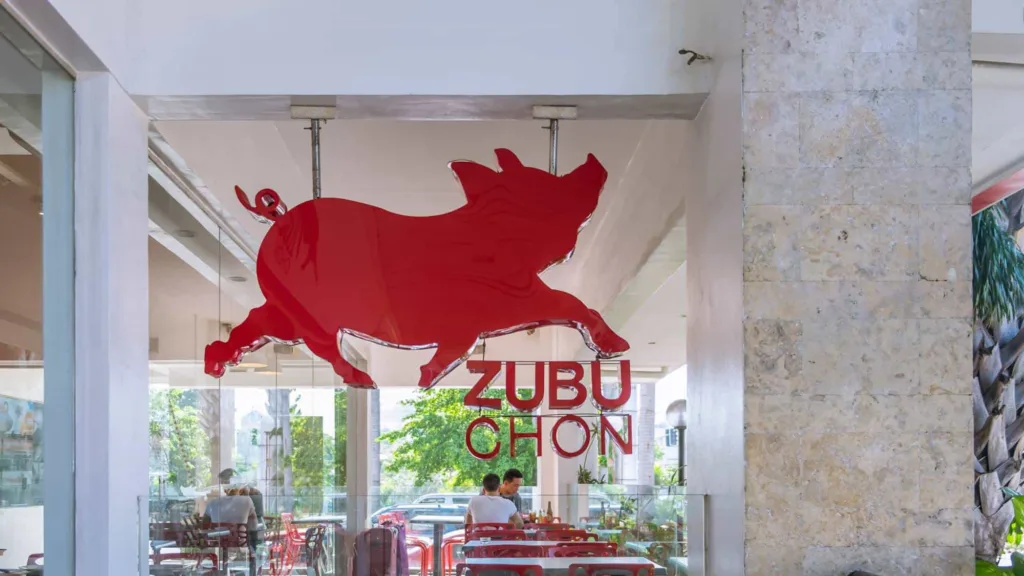
We were set to attend a lunch at the world-famous Zubuchon, which became internationally acclaimed after famed chef Anthony Bourdain declared that they served the best pig he’d ever had.
This lunch would highlight the very best of Filipino food, and I strategically positioned myself in a seat across the table from Ajay as the dishes began appearing onto the table before us.
First up, an easy introduction to Filipino food. A pineapple mint shakes is typically served as a welcome drink. Universally loved, this one needed no help getting everyone to agree how great it was.

Grilled scallops served on the shell were up next. These were breaded with a panko-like topping and tasted buttery. This is another dish that most everyone can agree to appreciate.

Then, servers carried out the next course–fish skin tacos. I was eager to try these because I had never heard of them before. Deep-fried fish skins served as taco shells, which you added freshly made ceviche to before enjoying. Personally, I loved the ceviche, but the group agreed that the fried fish skins were just okay.

Platefuls of sotanghon guisado came out next. This dish is made of spicy noodles and served with lime to squeeze over the top before mixing and eating.

After each of these universally enjoyed dishes, the restaurant finally threw us a curveball– dinuguan. Diniguan is a savory pork stew simmered in a dark gravy of garlic, chili, vinegar, and pig’s blood: pig’s blood soup. I was anxious to see how Ajay would respond to the dish.

Ajay surprised me by jumping right in, seemingly curious to try the new dish. After his first bite I asked him to describe the taste: “warm, salty than sour, smooth in consistency with a slightly bitter aftertaste,” he said.
Next up was the dish that made Zubuchon famous. I could write an entirely separate post just about Lechon. I could probably write an entire novel about Lechon.
The dish is roasted suckling pig, skin on, fatty. Lechon is actually the national dish of the Philippines, and the region we were in is famous for having the best. What’s more, Zubuchon itself is famous for having the best in the region, perhaps the best in the world.
We were served not one, but two types of Lechon. My favorite was the boneless spicy version. The Lechon was a Filipino food winner that everyone at the table could agree on.

I was a bit apprehensive of this salad because of its salted eggs. I don’t normally like salted eggs, because as the name implies, they’re usually (too) salty. This dish is known as ensaladang kamatis it log na maalat at tinapang bangus. That translates to smoked Bangus with salted egg and tomato salad. Bangus, also known as milkfish, is the national fish of the Philippines. In the end, I enjoyed the dish and thought it worked well because the tomatoes cut the saltiness of the eggs.

And finally, dessert. We were served biko, which is a traditional Filipino food served as dessert, made of sticky rice, coconut milk, and brown sugar. I’ve mentioned before that I’m not much of a dessert person, and this dish didn’t sway me much. It was very sweet, probably as desserts should be, but was not to my taste.

By the end of the meal, Ajay had declared that he liked nearly every dish. But would he call himself a foodie now? Perhaps not yet. Still, I did notice that he recently checked into Newtons, a popular local food center, during his recent visit to Singapore, so maybe he’s on his way.
Which dish looked best to you? Tell me the dish you would most like to try in the comments section below!
Practical Information:
Click here to check out Ajay’s website.
All photos credited to Ajay Sood.
Hahaha, Nathan! You could perhaps call me a reluctant foodie now on!
I think we are actually the exact opposite of Ajay when we travel. Please send your portions to us!
My husband is actually an executive chef from the Philippines and he said he’s never heard of a pineapple mint shake. Will have to try it some time!
Me also! Where is your husband a chef at? I would love to try his place sometime.
We live in South Korea!
But…if you were in town we’d have to invite you to our home instead for a proper meal!
I’m actually considering a visit to S Korea in May! I hear it’s a good time of year weather wise.
Yes and no. The weather is very nice in the spring months but we have to deal with yellow dust then. Dust from the deserts in China and Mongolia blow over towards Korea. They pick up pollution on the way and so it can really be a breathing hazard. The yellow dust tends to hit Korea from March – May….some of the nicest months of the year (of course!).
ha I’m to total opposite of Ajay I normally scrimp on accommodation so I can stuff myself with streetfood wherever I go. This post totally made my mouth water…I’m now off to raid the fridge
I’m the same as you! If you saw my post about Italy my friend and I decided the same thing- budget accommodation, unlimited funds for food and wine!
That food looks amazing. Can only imagine how it must’ve tasted! How are the vegetarian options in the Philippines? Not that I’m a hardcore vegetarian. Just that I’ve always found veggies to taste better than meat.
Ajay reminds of my housemate who always thought that eating was a chore she would avoid if she could. Even in day to day life.
I’m sure there are lots of good veggie options there but I was mostly going for the lechon lol. I had some veggie friends there and they seemed pretty happy.
The food looks amazing. As a vegetarian, I have to appreciate the look of a lot of food but have to pass trying it. I like the look of the pudding and the pineapple mint shake is right up my street.
I’m off in search of something sweet to eat now 🙂
I’ll have the meat dishes and you can have all the dessert dishes!
Do I have to pick just one dish? They all looked amazing to me! I love how Ajay went from not caring about food on travels to loving it and diving right into each dish.
Me too! He now calls himself a “Reluctant Foodie” lol
I’ve just made a huge mistake, I’m reading this at lunch time 🙁 The food sounds and looks delicious and the names made me smile as some have a hint of Spanish in them 😉
Haha, sorry about that! The food was really incredible and I also love the Spanish names! So much of the Philippines, including surnames, have Spanish aspects to them.
I was tempted by the scallops. Filipino cuisine seems really different from rest the of Asian cuisines, which is quite surprising.
The first time I was in the Philippines I didn’t care for the food but once I came back and tried more I actually really love it!
That all looks amazing, I would have definitely enjoyed most of those dishes minus the dinoguan, not my thing.
Well i am sold on food when travelling for sure. We have just finished 2 food tours in Spain, one Seville and one in Barcelona. Food is big part of why everyone travels i would think. We try local specialities when possible. Its not only your eyes that get visually feed when on holidays but your stomach aswell
The food looks great. How are the vegeterian food options? but that desert is on my list now. looks so yum.
I’m not sure about the Pineapple Mint Shake.. but my partner is a chef and he said he would be first in line! I like exploring the local food scene wherever we go, but some things I just can’t bring myself to try. I think I must try harder to become a proper foodie!
Every dish here looks so yummy and your description makes all the more interesting. I m still wondering how Ajay being a food photographer thinks the other way about food. I m definitely a great food and loved going up and down your post drooling over the pics 🙂
What fun that must have been to try to open the eyes of Ajay in the wonders of world class foods! Just think you could see by the look on his face if it was a winner or loser dish. Also all the food looked fabulous except for the fish skin tacos, not so sure about that one.
DROOOOL! I miss eating Filipino food. Oh man. Thanks for sharing this!
Looks so awesome.
Didnt know Ajay is not into food. Have met him few times and have enjoyed his company.
He now calls himself a reluctant foodie!
I LOVE Ceviche – I think it’s my favourite dish of all time! Simple, and tasty. And fish skin is also my guilty please, so I think I would have loved that dish. I also loved the look of lechon. OMG. I had Balut while in Philippines, I liked that as well. I guess I’d definitely be a foodie 😉
Makes me hungry! I like to think I am a bit of a foodie… but I am terrible at trying new food. Although lechon does look amazing, I’d definitely love to try that.
Come hang with me and I’ll make a foodie out of you!
I love this quote ‘food is a necessary evil we have to waste time on during our travels’ – I travel with so many foodies it’s a refreshing attitude. Nonetheless, it’s hard not to savour a great meal. I’ll pass on the fish skin though!
The skin wasn’t my favorite either but it wasn’t as bad as I thought it might be!
Oh, the lechon!! I could eat that all day! I’ve always had Filipino friends so I’ve been able to try a lot of dishes. Lechon and lumpia have always been my favorite.
Those are two of my favorites also!
I want try all of these dishes, although I might have trouble mentally with the pig blood soup. I love pineapple so I would love to try that! And the presentation of the scallops was really beautiful. I hope your friend gives food while traveling another chance.
He now calls himself a “reluctant foodie” so I think he’s well on his way!
What I found particularly interesting was that the Philippines is so close to Indonesia, and so much is so similar, but…..the food you’ve shown here looks infinitely better than what I’ve eaten in Indo. This food looks absolutely incredible.
I also didn’t love the food in Indonesia. I didn’t love the food the first time I was in the Philippines but this time I found so many things that I loved. Maybe I should give Indonesian food another try but last time it just felt like a lot of fried rice and fried noodles.
OMG! I absolutely love Zubuchon. I tried most of the food here and each time I go to Cebu ( which is often), I make sure to visit it. I love love love zubuchon.
Me too! It was so delicious. The first time I went to the Philippines I didn’t love the food but this time I left feeling much differently. Lechon is one of my new favorites dishes!
How can someone not love food! That’s such a sad way to live life! Way to try and change his attitude 😛
I’m from the Philippines so I know all these foods. I can’t blame you with the biko. I am very picky with them. Not everyone can make a perfect biko which is not sickeningly sweet. To make the perfect biko you need to constantly stir it for many hours on low heat. No one does that anymore.
I would like to try it like that! I don’t like too many desserts because I find most of them too sweet but if I could try this traditional recipe I definitely would!
This food looks absolutely amazing! My stomach is grumbling just looking at it. I never would have associated peppermint with Filipino food though!
That shake is the only dish I remember it being in!
Whoa! Such delicious spreads. I often forget to read when I see these food pics. And names like ” ensaladang kamatis it log na maalat at tinapang bangus” – how does one sell that? I will have to point my fingers to place an order. 🙂
I had to text one of my Filipino friends to help me w/the spelling on that one!
I don’t think I have had Filipino food before but I would love to try all of them! Thank you for sharing 🙂
We are complete foodies (of the vegetarian kind) so we know your feelings when someone utters such a statement 🙂 however though we may not ever try most of the items you’ve covered in your post, we can literally see your enthusiasm in converting Ajay.. We see he’s become a reluctant foodie now 🙂
yum!
The biko looks superb!
Everything looks great actually
Thanks for sharing!
I love Biko, It was one of the first Filipino Desserts I have learned and tasted
It is not called ceviche in the Philippines it is kinilaw and is my favorite dish in the Philippines I’ve never had sushi or any sort of non-traditionally cooked seafood but by the time I left the Philippines the first time it was my favorite dish and I ordered it at every restaurant that we went to and we went tomany.
Nathan, you never explained your take on the Diniguan. I am interested to read what you thought of it from a foodie’s perspective. When you travel to S.Korea try the sausage version mixed with rice. The best things about Filipino desserts are mainly starch based and usually is a nice balance of sweetness.
The one other thing I enjoy about eating AND cooking Filipino dishes is the fact they are mostly naked in the sense that they are able to extract the natural flavors of the ingredients without a lot of herbs and spices which historically and regionally quiet different other regions in the that are heavy in spices and herbs. Aside from salt and pepper and a souring agent most flavors are extracted from the main ingredients of the proteins, fruits, and vegetables. The souring agent I assume started with the vinegars used in pre-colonial dishes used to preserve their proteins.
Your article is positive-sounding but also limited in its scope because that restaurant offered a narrow sampling of Filipino cuisine. You should try next time: pork adobo, chicken adobo, shrimp sinigang, pork sisig, kaldereta, pancit palabok, kare-kare, pinakbet, chicken inasal, pancit molo, etc.
You have a very informative blog. I want to try all the dishes, especially the lechon. Where is Zubuchon located in the Philippines?
Isn’t adobo the national food of the Philippines?